
UNESCO Highlights in Colombia: World Heritage, Natural Wonders, and Festivals
Colombia’s UNESCO Heritage: Cultural Treasures, Natural Paradises, and Living Traditions
Colombia is rich in UNESCO-recognized treasures—from colonial old towns and archaeological parks to natural wonders and vibrant festivals. Discover which World Heritage sites and traditions you can experience on your trip, and get insider tips for an authentic journey.
In Colombia, natural wonders, cultural diversity, and living traditions come together—so impressively that UNESCO has already recognized many of these treasures as World Cultural or Natural Heritage and as Intangible Cultural Heritage. In the 21st century alone, 14 Colombian sites and customs have received this special status. Whether a colonial old town, a pre-Hispanic sacred site, a remote national park, or a colorful festival—Colombia’s UNESCO distinctions reflect the country’s immense diversity. Below, we present the most important UNESCO World Heritage sites and cultural traditions, along with practical tips on how to experience them authentically.

Living Traditions as UNESCO Intangible Cultural Heritage
Carnivals and Festivals: Barranquilla, Negros y Blancos, Popayán, and more
Every year, Colombia comes alive in colorful celebrations. Leading the way is the Barranquilla Carnival, the world’s second-largest carnival after Rio. For four days before Ash Wednesday, the Caribbean coastal metropolis dances to cumbia rhythms, vibrant parades, and traditional costumes.
Further south, the Andean city of Pasto celebrates the Carnaval de Negros y Blancos: in early January, wild black-and-white color battles alternate with magnificent parades and giant floats—an extraordinary spectacle of Nariño culture.
The Holy Week processions in Popayán are also part of UNESCO’s intangible heritage: in the colonial “White City” of Popayán in the highlands, solemn Easter processions have moved through the streets for centuries. Anyone who wants to experience these festivities should plan travel dates accordingly and arrange accommodations and tickets (e.g., grandstand seats for the carnival) well in advance.
But it’s not only the major events that are UNESCO-worthy: in Quibdó (Chocó), the Afro-Colombian community celebrates the Fiestas de San Pacho every September in honor of Saint Francis of Assisi. This blend of Catholic tradition and African rhythms turns the entire city into a dancing street festival. Visitors who make it to this remote Pacific region can expect authentic culture and warm hospitality—a true insider tip far off the usual tourist routes.

Music and Song: Vallenato, Marimba, and Llanero Sounds
Colombia is a country of music, something UNESCO has honored with multiple designations. First and foremost is vallenato music from the Caribbean region: with accordion, drum, and guacharaca, traditional songs from Valledupar tell stories of heartbreak and everyday village life. If you’re traveling in the region, you should experience a vallenato serenade live—especially at the annual Vallenato Festival in Valledupar, where Colombia’s best accordion players compete against one another.
On the Pacific coast, meanwhile, marimba music dominates among Afro-Colombian communities. Xylophone-like marimbas, drums, and polyphonic singing create trance-like melodies that are still cultivated at village festivities in regions such as Guapi or Timbiquí. Even if you don’t travel to these remote places, you can experience these sounds at Cali’s Petronio Álvarez Festival, the country’s largest Afro-Colombian music festival.
Finally, the work songs of the Llaneros (Cantos de trabajo de llano) also contribute to UNESCO heritage: in the endless savannas of eastern Colombia, cowboy songs have, for generations, soothed cattle while herding them across rivers or during milking. Some hatos (ranches) in the Llanos now offer tourists the chance to share in this way of life—riding with the Llaneros and ending the day with a musical campfire under a vast, star-filled sky.

Community and Knowledge: Palenque, the Wayuu, and Jaguar Shamans
Some UNESCO-recognized traditions are closely tied to specific communities and their inherited knowledge. A special example is the cultural space of San Basilio de Palenque, a small village near Cartagena. Founded in the 17th century by escaped enslaved people, Palenque has preserved its own language (Palenquero), music, and medical traditions of African origin to this day. Travelers can experience this living history on a visit to Palenque—ideally with a local guide who can facilitate meaningful exchange with residents.
In northeastern Colombia, in the desert region of La Guajira, the Wayuu normative system ensures that conflicts within the indigenous Wayuu population are resolved peacefully. The so-called Palabrero (spokesperson/mediator) negotiates between parties according to ancient customary law. While this ritual is not easily accessible to outsiders, a trip to La Guajira is still well worth it: in Wayuu villages, you can gain authentic insights into traditions such as weaving colorful mochila bags. A tour with indigenous local guides helps ensure respectful contact with the culture.
Deep in Colombia’s Amazon region, indigenous shamans safeguard the knowledge of the Jaguar Shamans of Yuruparí. This spiritual ritual system—centered around sacred musical instruments and rainforest myths—is regarded by UNESCO as a treasure of humanity. As a traveler, you cannot visit this tradition directly—the ceremonies are sacred and reserved for the community—yet its recognition alone shows how vibrant and diverse Colombia’s cultural heritage is. Staying in a community-based ecotourism project in the Amazon, for example with the Tukano or Huitoto peoples near Leticia, can at least allow for a careful, respectful glimpse into the world of indigenous communities.

UNESCO World Heritage Sites: Colombia’s Cultural and Natural Jewels
Colonial Cities: Cartagena and Mompox
Colombia’s history as a Spanish colony lives on in its historic towns. At the forefront is Caribbean Cartagena de Indias: the old town, surrounded by thick fortress walls and guarded by the impressive Castillo San Felipe de Barajas, was designated a UNESCO World Cultural Heritage site as early as 1984. By day, pastel-colored colonial houses glow in the sun; by night, lively activity fills the plazas. Strolling through Cartagena’s flower-lined lanes feels like traveling back in time—tip: enjoy sunset on the city wall with a freshly mixed cocktail while street musicians set the mood.
In contrast to the bustling metropolis of Cartagena stands the sleepy Santa Cruz de Mompox (Mompós) on the banks of the Magdalena River. This colonial jewel, recognized by UNESCO in 1995, seems barely changed for centuries: splendid churches, shaded courtyards, and wrought-iron balconies speak to its former wealth as a trading town. Today, you can reach Mompox only overland or by boat—a journey worth taking to feel the place’s magic. After dark, a special spell settles over the quiet streets, and you may feel transported into Gabriel García Márquez’s Macondo. Our tip: if timing allows, visit the Mompox Jazz Festival in late summer, when the town fills with music without losing its calm charm.

Pre-Columbian Treasures: San Agustín, Tierradentro, and the Inca Trail
Long before the colonial era, Colombia’s indigenous peoples created impressive cultural sites that are now UNESCO World Heritage. In the southern Andean highlands near San Agustín (Huila), the San Agustín Archaeological Park features the largest concentration of megalithic sculptures in South America. Stone deity figures with fearsome grimaces and mystical animal faces stand guard over ancient burial sites. A local guided tour brings the legends behind them to life—Chaska Tours, for instance, is based in San Agustín and knows the secrets of this place firsthand. Adventurous travelers can also explore the area on horseback or by mountain bike to visit hidden waterfalls and additional excavation sites such as El Tablón or La Chaquira.
Not far away, in the mountainous interior of the Department of Cauca, lies Tierradentro—another archaeological site of world-class significance. Unlike San Agustín, the highlights here are underground tomb complexes (hypogea), reached by descending steep stairways cut into rock. Below, visitors find painted burial chambers with geometric patterns in red, black, and white—a true Indiana Jones moment! Because Tierradentro is remote and not crowded with tourists, infrastructure is simple, but the experience is all the more authentic. Plan enough time for hikes between the sites, and ideally stay overnight in one of the family-run guesthouses locally to enjoy the quiet of the rural Andes.
A less tangible yet historically significant UNESCO heritage site is the Qhapaq Ñan: this centuries-old Inca road network stretched over 6,000 kilometers from Argentina to southern Colombia. Even though only a few traces of this Inca Trail are visible in Colombia, a detour into the highlands of Nariño is worthwhile, where part of the route once ran near the Ecuadorian border. Here—between rugged mountains and crater lakes—you can imagine llamas laden with Inca treasures crossing the passes. This transnational site was added to the World Heritage list in 2014—a reminder that Colombia also stood at the gateway to the Inca realm.
Coffee Cultural Landscape: The Coffee Triangle
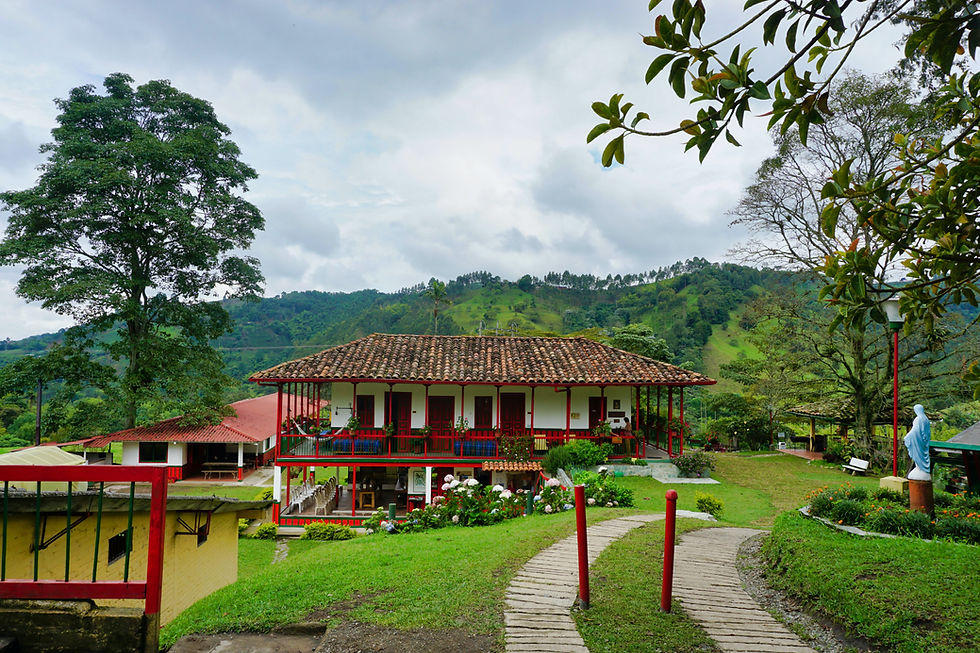
Aromatic coffee is inseparable from Colombia—so much so that the heart of the growing region was recognized by UNESCO as the Coffee Cultural Landscape of Colombia (“Eje Cafetero”). Between the central Andean cordilleras, gentle emerald-green hills stretch out, where coffee has been cultivated for generations. The region includes traditional departments such as Caldas, Quindío, and Risaralda, where one finca follows the next. Visitors can closely follow the journey of the coffee cherry from shrub to cup: many haciendas offer tours where you walk through plantations, watch the roasting process, and—of course—taste freshly brewed coffee.
Beyond the coffee itself, the landscape and culture are equally impressive: colorful colonial towns such as Salento or Filandia, with their balconies, invite you to linger. Traditional Willys Jeeps—once used to transport the coffee harvest—are now used for adventurous rides through the hills, for example to the breathtaking Cocora Valley, where colossal wax palms rise into the sky. The Coffee Triangle is ideal for experiencing sustainable agritourism: stay on a family-run coffee farm, enjoy homemade regional specialties, and immerse yourself in the unhurried daily life of coffee farmers. That’s what authentic Colombia tastes like!

Natural Wonders Under UNESCO Protection: Los Katíos, Malpelo, and Chiribiquete
Colombia’s natural treasures have also been honored by UNESCO. Los Katíos National Park (a UNESCO Natural World Heritage site since 1994) is part of the Darién jungle, one of the world’s most biodiverse regions, on the border with Panama. Tapirs, brightly colored poison dart frogs, and rare harpy eagles live in a difficult-to-access rainforest landscape. Tourism infrastructure in Los Katíos is minimal—an advantage for nature, which can thrive undisturbed. Adventurers with time and an expedition spirit may try to obtain a visitation permit via towns such as Turbo or Riosucio, but should check the security situation in advance. For most travelers, Los Katíos remains a mythical paradise best explored in imagination.
Far more accessible—at least for experienced divers—is the Malpelo Nature Reserve. Malpelo is a small, rugged rock island about 500 km off the Pacific coast, and its surrounding waters were declared a UNESCO Natural World Heritage site in 2006 for their extraordinary ecosystem (including sharks, rays, and whales). While there are no beaches or hotels on Malpelo—the island is uninhabited and serves only as a base for Colombian naval units—liveaboard dive boats from Buenaventura or Panama City run multi-day dive safaris to the area. Those lucky enough to dive here encounter schools of hammerhead sharks and an underwater panorama straight out of a nature documentary.
Finally, Chiribiquete National Park in the Amazon is Colombia’s largest national park at over 4.3 million hectares and has been a UNESCO World Heritage site since 2018 (both cultural and natural heritage). Its table-top mountains (tepuis) rise like islands from the jungle, and their rock faces hold thousands of prehistoric rock paintings—hence the nickname “Maloka of the Jaguar.” Chiribiquete is a place full of mysteries, still revered by indigenous peoples today. To preserve this treasure, tourism and even scientific visits are strictly regulated: the park is not open to the public. Until 2019, overflights were still permitted, but these too were suspended for protection. The best option for the curious is guided hiking in neighboring areas such as Caquetá or Guaviare, where you can admire similar tepui landscapes and, in some places, rock art as well—without entering Chiribiquete itself. This way, you experience the magic of the Amazon while the core of this world wonder remains untouched.

Colombia’s UNESCO heritage shows impressively just how diverse and experience-rich this country is. From places shaped by the past to truly vibrant festivals, travelers of every kind have countless opportunities to immerse themselves in culture and nature. What matters most is treating these treasures with respect and mindfulness so they can be preserved for a long time to come. Whether it’s an adventure trip, a cultural circuit, or a relaxing vacation—with Chaska Tours by your side, you can discover Colombia’s UNESCO sites and traditions exactly the way you want. As local experts, we plan your tour individually, personally, and with a sustainable approach. Let Colombia’s heritage enchant you—we’ll be happy to help you turn your dream trip into reality.


Comments