
Moving to Colombia: What Shouldn't Be Missing from Your First Inspection Trip
Anyone considering a move to Colombia should not treat their first trip as a vacation. What matters is an honest test of everyday life: exploring realistic regions, preparing thoroughly, and allowing enough time to properly evaluate climate, living conditions, and visa options.

The Biggest Mistake on a First Trip
Anyone seriously considering moving to Colombia should plan their first trip around everyday life, not tourist attractions. That is the key point: it is not about whether Cartagena looks beautiful at sunset or Medellín feels pleasant in January, but whether a specific location actually works as a place to live.
In Colombia, climate, rainfall patterns, mobility, security conditions, and infrastructure vary significantly between the Andes, the Coffee Region, the Caribbean coast, and more rural areas. In addition, not every visa frequently mentioned in online forums is actually a viable path toward long-term residence.
For example, the current Digital Nomad Visa belongs to the visitor visa category and explicitly does not provide temporary or permanent resident status.
For this reason, a good inspection trip ideally begins before departure with three straightforward questions:
Which visa pathway is realistically available?
What does my financial and tax situation look like?
What kind of daily life am I actually looking for: a major city with international connectivity, a medium-sized Andean city, coastal living, or a deliberately slower lifestyle in southern Colombia?
The tax aspect in particular is often underestimated. Anyone spending extended periods in Colombia may become a tax resident after more than 183 days within any rolling 365-day period. This is not a minor detail—it is a fundamental consideration.

What Every Inspection Trip Should Include
The most effective inspection trips do not try to cover too many destinations. Instead, they focus on testing two, or at most three, serious candidates.
Three nights per location is usually the minimum; four or five nights is even better. This allows you to experience both weekdays and weekends, routine shopping, evening activities, morning traffic, and determine whether a neighborhood still feels right outside its most attractive hours.
There are five practical tests that should never be skipped:
First: Visit residential neighborhoods in the morning, afternoon, and after dark.
Second: Physically travel the routes to hospitals, supermarkets, pharmacies, airports, or coworking spaces instead of relying solely on maps.
Third: Consider at least one rainy day—or at minimum a wetter period—especially in the Andes, where rainfall can significantly affect roads and daily routines.
Fourth: Before traveling, clarify which documents for your visa pathway must be apostilled, translated, or updated.
Fifth: Do not distort your assessment by treating the trip as a luxury vacation. A location should also work when staying in accommodations that resemble your future daily life more closely than a holiday experience.
Official guidance regarding visas, seasonality, and regional travel conditions strongly supports this practical and realistic approach.

Anyone planning a move with family should add two more considerations:
Evaluate schools or childcare options, at least through visits and conversations.
Honestly assess daily logistics.
What feels easy during a holiday month may look very different once children, medical appointments, or regular commuting become part of everyday life.
How Different Regions Feel
For many people, the evaluation begins in Bogotá. There are practical reasons for this. The capital is Colombia's most important international transportation hub, and El Dorado Airport offers connections to a particularly large number of international destinations. Anyone who expects to travel frequently to Europe or elsewhere in the Americas, appreciates the convenience of centralized government services, or enjoys the density and opportunities of a capital city should not dismiss Bogotá too quickly simply because of the weather or traffic. At the same time, the high-altitude climate is noticeably cooler than the Caribbean coast.

Medellín and the Aburrá Valley: Medellín and the greater Aburrá Valley remain attractive for those seeking an urban environment with a milder climate. The city is officially characterized by year-round temperatures averaging around 19°C (66°F) and has established itself as a recognized science and innovation district. For people looking for a modern urban setting combined with a spring-like climate, Medellín is a logical starting point for evaluation. However, it should be assessed beyond stereotypes, with attention to specific neighborhoods, elevations, and daily commuting patterns.

The Coffee Region: When discussing relocation, Colombia's Coffee Region is often underestimated. Yet Pereira, Armenia, and Manizales combine a more manageable scale than Bogotá or Medellín with strong universities, regional infrastructure, and excellent access to the Andean landscape. Pereira also offers international flight connections. For a first residential assessment, the Coffee Region is particularly attractive for those seeking nature, a smaller scale of living, and still having access to urban essentials.

The Caribbean Coast: Anyone considering Colombia's Caribbean coast should be careful not to confuse a love for the coast with long-term livability. Cartagena offers a tropical climate averaging around 27°C (81°F) throughout the year, along with extensive tourism and restaurant infrastructure. Santa Marta is similarly warm but combines the Caribbean Sea, the Sierra Nevada mountains, and a different atmosphere that is often more connected to nature.
Both destinations can be excellent choices—but only if heat, humidity, seasonal tourism peaks, and a stronger tourism-oriented environment are genuinely appealing. For many people, a first trip to the Caribbean coast serves more as an honest reality check than as confirmation of romantic expectations.

Looking Beyond the Usual Expat Routes
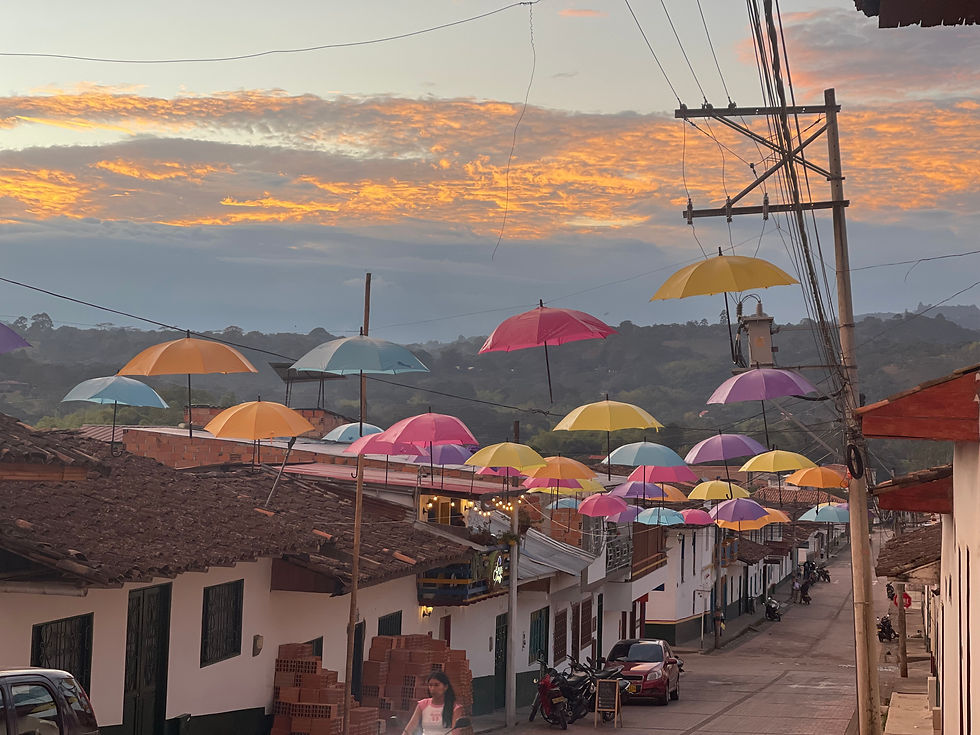
From a local perspective, it is also worth looking beyond the typical expatriate destinations.
Southern Colombia receives far less attention in relocation forums, yet it provides a clear picture of how different life can feel outside the country's major urban centers: cooler, more rural, slower-paced, and often more community-oriented. Chaska Tours is based in San Agustín and experiences these contrasts firsthand every day.

How Chaska Tours Can Help
A successful inspection trip requires one thing above all else: meaningful comparisons rather than an overloaded itinerary. This is precisely where a local specialist can make a difference. Since 2005, Chaska Tours has operated from San Agustín, designing customized private journeys and working with local partners while emphasizing sustainable value creation and destinations beyond the standard tourist routes. That approach is valuable for traditional vacations—but arguably even more important for relocation trips. Because the goal is not to collect more highlights. The goal is to see the right places in the right sequence and avoid becoming trapped inside a tourist bubble. In practical terms, that means choosing a thoughtfully designed route with clear comparison points rather than pursuing the most impressive list of experiences. Anyone planning to move to Colombia does not need a more beautiful trip. They need a more honest one.
When a simple idea evolves into a serious exploration trip, Chaska Tours can design the journey in a way that focuses not only on beautiful destinations but also on meaningful points of comparison.
Personalized, locally rooted, and without the tone of a sales presentation — more like a carefully planned rehearsal for a new life.


Comments